
In Summary
E-mobility in Kenya is a reflection of the global transition rapidly reshaping transport. Across Europe, Asia, and North America, internal combustion engine (ICE) vehicles are being phased out, with bans on their sale set to come into effect as early as 2030 in some markets, and more comprehensively by 2035. Africa now has a fork on its sustainability road; without proactive and timely policy levers to transition the market, the continent risks becoming a dumping ground for obsolete ICE vehicles, worsening urban air quality, locking in fossil fuel dependence, and eroding its global competitiveness. On the other hand, with its abundant renewable energy potential, mineral resources and a young tech-savvy workforce, the continent is set for success.
Kenya, with its 90 per cent renewable power grid, strong entrepreneurial base, and dynamic technology sector, is uniquely placed to leapfrog into this future. The reality is that the real drivers of this transition aren’t individuals buying private EVs. Rather, it is microentrepreneurs, corporates and government institutions whose fleets of motorcycles, buses, delivery vehicles, trucks, and staff cars dominate both passenger and freight transport. Their buying power, combined with the operational scale they bring, could be a compelling reason why corporate sectors will accelerate electric vehicle adoption in Kenya and set the tone for national e-mobility development.
AfEMA understands the challenges and opportunities surrounding corporate e-mobility adoption and has initiated the E-Mobility Management Accelerator, with a focus on Kenyan institutions among other countries.
Global 2035 ICE Bans and Africa’s Risks
By 2035, some of the world’s largest economies will have phased out new ICE vehicle sales. The EU, the UK, China, and U.S. states such as California and New York, together representing more than 40 per cent of global GDP, are already legislating for this transition.
- European Union (2035): All new cars and vans must be zero-emission.
- United Kingdom (2035): Ban on petrol, diesel, LPG, and hybrid vehicles; only zero-emission cars may be sold.
- China (2035): 100 per cent of new vehicles must be “new energy” (50 per cent full EVs or fuel-cell, 50 per cent hybrids).
- California & 17 U.S. States (2035): Full ban on new ICE vehicles, aligned with the Advanced Clean Cars II rule.
By the look of things, this global realignment will have profound implications for Africa, particularly for the fledgling e-mobility industry in Kenya, a country that relies heavily on imported used fossil fuel vehicles.
Risks of ICE Vehicle Bans for African Businesses by 2035
Geopolitical Risk
Africa could become a bigger dumping ground for outdated ICE vehicles, further exacerbating the situation for 72% of African countries, which already allow vehicle imports that are six years or older. Kenya’s electric vehicle future must anticipate and plan for this scenario.
Economic Risk
Worsening reliance on fossil fuel imports: Kenya and Ethiopia each spend at least $4–6 billion annually on refined fuel imports with ever-increasing exposure to global oil price shocks and foreign exchange pressures. Institutional electric mobility transition in Kenya is inevitable to mitigate this risk.
Environmental Risk
Tailpipe emissions from ICE vehicles worsen air quality, contributing to respiratory illnesses, resulting in economic losses due to diminished human health and productivity. Air pollution already costs Africa an estimated 6.14% of GDP annually.
Competitiveness Risk
Without adequate EV infrastructure to industrialise aggressively while tapping into locally generated clean energy resources, Africa risks missing out on the global boom in EV sales, projected to surpass 40 per cent of new sales worldwide by 2030, translating to a $9 trillion market opportunity.
Where do these potential challenges leave Kenya’s corporate and institutional sectors?
Kenya’s Driving Force – Corporate and Institutional Sectors
The transport sector, a key economic function in Kenya, contributed 4.4% to national GDP in 2024, with a growing contribution from corporate and institutional EV fleets. Road transport accounts for more than 80% of goods movement and 93% of passenger volumes. Corporate and institutional fleets, including those of government ministries, parastatals, and companies of all sizes, play a significant role due to their scale and intensity of operations.
Examples of Institutional Vehicle Procurement in Kenya
- As of 2025, Kenya Power, the country’s utility, operates over 2,000 vehicles across its fleet, from motorcycles for meter reading to field trucks, staff vehicles, among others, a sign of the potential scale of EV investments that can be realised with their transition.
- Government of Kenya tenders often procure fleets in batches of 1,000 or more vehicles at a time.
- Corporations like Safaricom, East African Breweries, and logistics operators lease or purchase hundreds of vehicles annually, providing prime grounds for EV fleet solution providers targeting the corporate space.
These entities typically purchase new vehicles (unlike private buyers, who continue driving the growth of used imports), meaning the price gap between new EVs and new ICE vehicles is narrower. Moreover, their procurement cycles (2–5 years for leased fleets) generate a steady flow of vehicles into the secondary market, potentially creating a pipeline of used EVs for the secondary market locally, for smaller businesses and individuals.
Kenya’s 80% renewable energy grid and an existing competitive electricity tariff for e-mobility provide a compelling business and environemnt for institutional transition.
Have you understood how this potential intersects with the existing e-mobility landscape in Kenya?
Kenya’s E-Mobility Ecosystem
Steady advancements around EV policy and investments in Africa are paving the way for vibrant ecosystems, with Kenya being an example.
- Kenya Power: Committed to converting its 2,000-vehicle fleet to electric by 2027.
- Local New EV Dealers: Simba Corp (Mahindra, Morris Garages), CFAO (through Loxea to distribute BYD), and JAC Motors, Kabisa, Hyundai, Rideence are examples of dealers of electric four wheel vehicles to service corporate and institutional needs. .
- Ecosystem Coordination: EMAK (Electric Mobility Association of Kenya) brings together over 50 e-mobility companies, 9 of which provide medium and heavy-duty vehicle solutions. This promising ecosystem still highlights a structural imbalance in supply especially for this institusional which has the potential to drive national change.
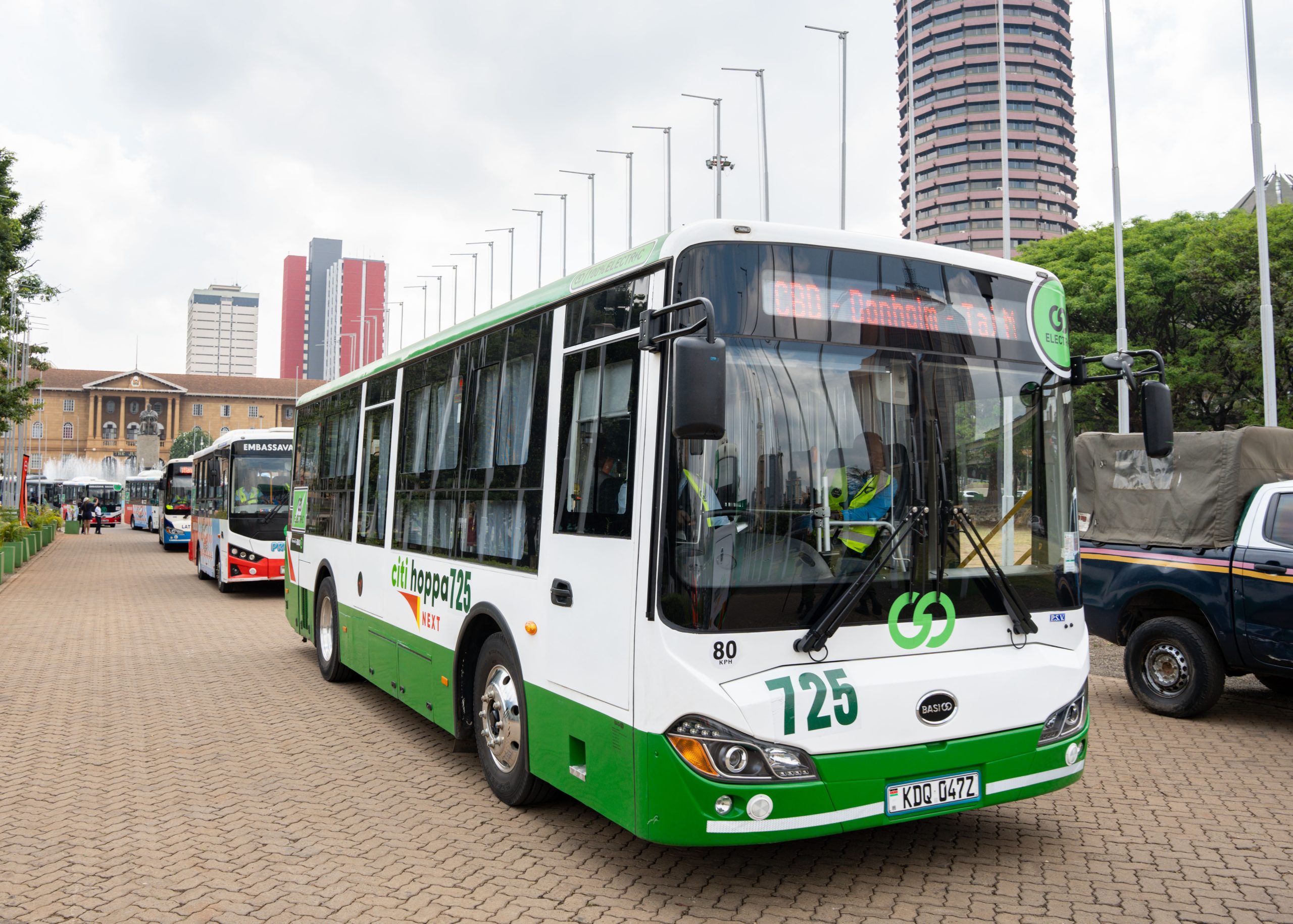
- Acute Focus on Public and Shared Transport: Kenya’s EV ecosystem is dominated by passenger public transport solutions in the motorcycle and (mini) bus segments. Notable developments include BasiGo’s deployment of 100 e-buses and plans 1,000 more by 2028, leveraging pay-as-you-drive leasing models. Greenwheels and Uber’s collaboration is on its way to roll out 3000 electric motorcycles to serve Nairobi’s growing light transport needs, serviced by motorcycles and infrastructure from ROAM and Arc Ride. Spiro, one of Africa’s largest EV companies, has deployed over 1500 motorcycles and 100 charging stations in Kenya by early 2025, powering their business models with innovative financing and battery swapping to remove additional capex costs from its buyers. Ebee has also rolled out over 1000 electric bicycles for commercial delivery services across Nairobi and Mombasa.
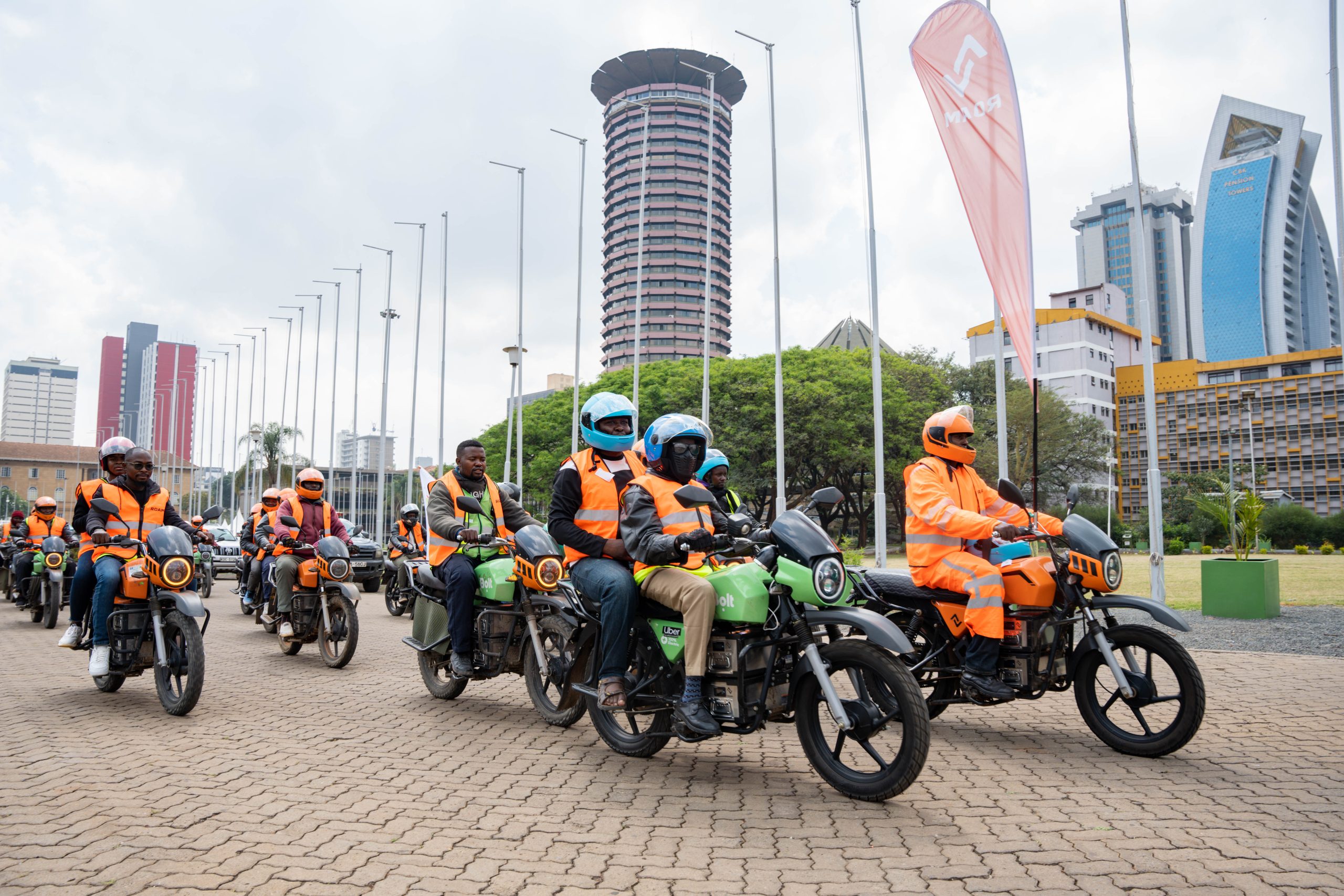
This ecosystem provides a strong foundation for scaling EV investments in Kenya in 2025 and beyond, but also reveals imbalances: the dominance of electric motorcycles, bicycles and buses contrasts with the limited availability of e-cars, trucks, vans and utility vehicles.This trends is becoming commonplace across other Sub Saharan African countries where public transport solutions prevail, revealing similar e-mobility opportunities in the 2025-2035 horizon.
You might be wondering why the institutions, including yours, aren’t moving fast enough. Here’s why.
Barriers to Leadership
Despite the progress, three categories of barriers remain critical for institutional electric mobility growth in Kenya, notably:
Limited Model Availability
As of September 2025, only 9 of the 50+ members of EMAK have solutions for te medium and heavy duty segments, highlighting the inadequate supply of product and business models, which imminently limits the options for corporate and institutional needs.
Infrastructure & Policy Gaps
A large fraction of the charging infrastructure is concentrated in Nairobi, limiting the reach of solutions being deployed. Regulatory clarity is lacking due to the pending adoption of the national e-mobility policy. (Kenya Draft e-Mobility Policy). The exising tax provisions are also notably weak, for instance, new four-wheel EVs are subjected to 35% import, 16% VAT, and an inconsequential reduction in excise duties (from 20% to 10%), whereas used vehicle imports enjoy a depreciated CSRP for their age, despite their increased inefficiency, under Kenya’s vehicle importation scheme.
Inadequate Financial Products for E-Mobility
A small but growing number of financial institutions from banks (NCBA, KCB Kenya, Family Bank) to microfinance institutions (MKopa, Watu Africa, Mogo Kenya) are already partnering with institutions and e-mobility providers to avail financing products, though growth is still leaning on passenger and public transport solutions and less of institutional transformation. On the insurance front, only a handful of providers have made commitments, including GA Insurance and Britam
Where Does the Road Lead?
Kenya’s corporate and institutional leaders must recognise that the global automotive industry is undergoing a seismic shift, and failure to act will expose them to financial, operational, and reputational risks. Their procurement power, supported by Kenya’s renewable grid and a growing vibrance in the solutions market, positions them for national and regional leadership and access to other EV-ready countries like Rwanda. EV fleet solutions for Kenyan corporates exist, and are on a rapid growth trajectory.
The time to commit to e-mobility in Kenya is now, not in 2035, when global bans will already have reshaped the market. Avenues like the E-Mobility Management Accelerator are a low-hanging opportunity for getting on the implementation track and gaining first-mover advantage. Article 2, ‘The Cost of Inaction’, will explore the practical steps corporates can take to assess fleets, analyse total cost of ownership, leverage procurement models, and build partnerships to overcome barriers.
Author – Warren Ondanje
From a university dreamer straddling between engineering, radio production, and AIESEC events to a dynamo powering Africa’s e-mobility revolution, Warren Ondanje is all about responsible business and brand.
Fast-forward, and he’s the Managing Director of the Africa E-Mobility Alliance, snagging a $150,000 ClimateWorks grant for EV battery circularity, turning the Africa E-Mobility Week into a 300+ delegate hotspot, and launching the continent’s biggest E-Mobility Data Portal—tracking 175 companies and $370 million in investments.
Before AfEMA, Warren was at ARC Ride Kenya, he didn’t just talk shop; he built a 20+ member crew in 2021, rolled out the initial pilot of 30 electric motorcycles, left a blueprint for rolling out another 300 electric motorcycles, and spearheaded duty reduction initiatives through local assembly to the tune of 30% – responsible businesses that leads to better customer offering.